Budget 2026 – Economic and Fiscal Implications

Investment Solutions | Significant Wealth Owner Solutions | Specialist Advice Solutions | Wealth Management Solutions
By David Clark, Partner - Investment Management Paul Ashworth, Managing Partner, Chief Investment Officer
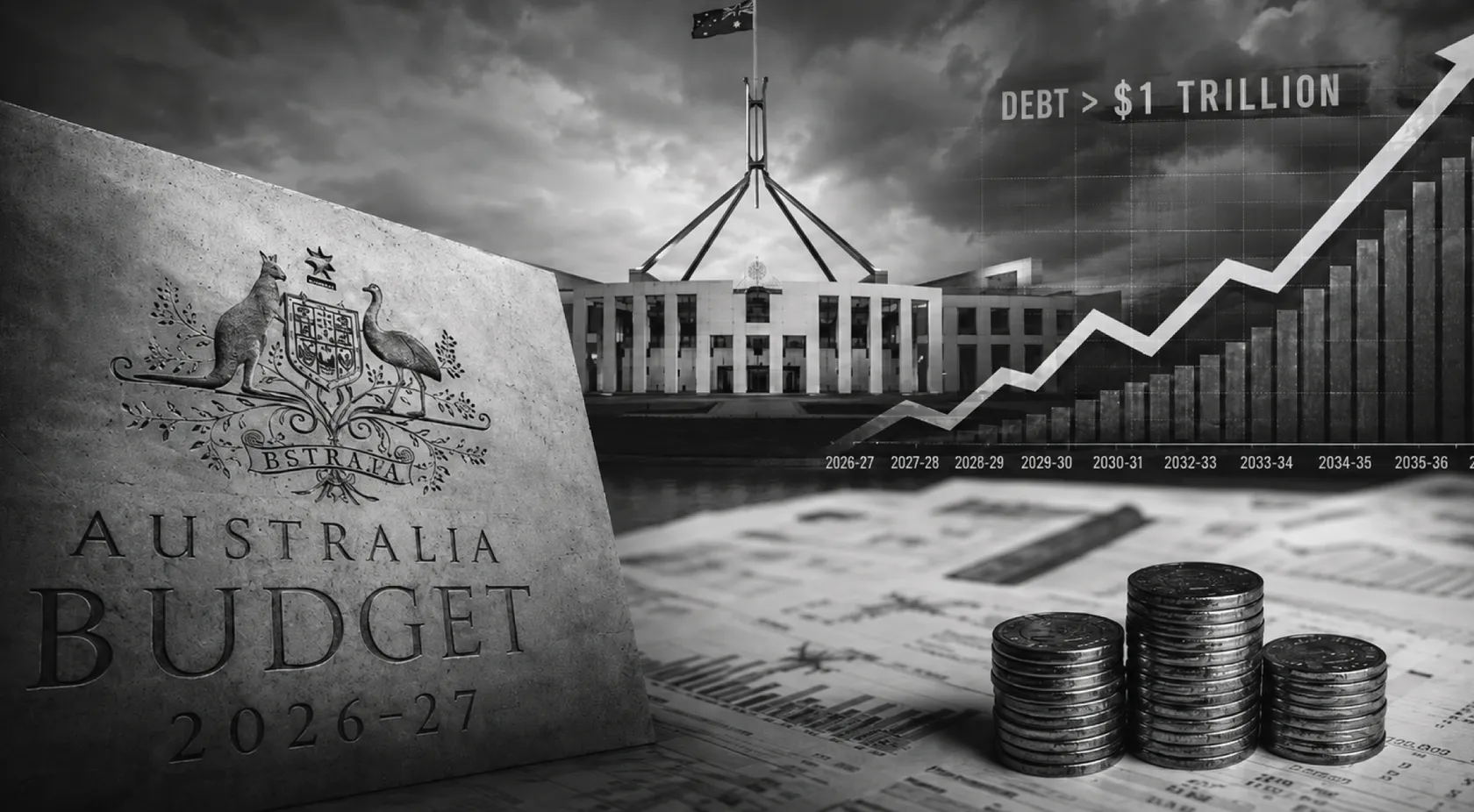
At a point in the economic cycle when budget repair should be easy, with unemployment low, wage growth strong, and commodity prices high, this Budget fails to address rising debt over the forward estimates, with gross debt to exceed $1 trillion by year end.
Posted 13 May 2026

They say never make the same mistake twice – Labor’s main learning from the 2019 election failure appears to be it’s better to ask for forgiveness than permission. In this year’s Federal Budget, the Treasurer has recycled the key policies from the Shorten years (ex. Franking Credits) and ignited the fuse on generational warfare. It is a calculated political gamble from a government that is banking on appealing to a growing cohort of disillusioned younger voters and hoping that the rest of the electorate will not have long memories come the next federal election, which is not until 2028.
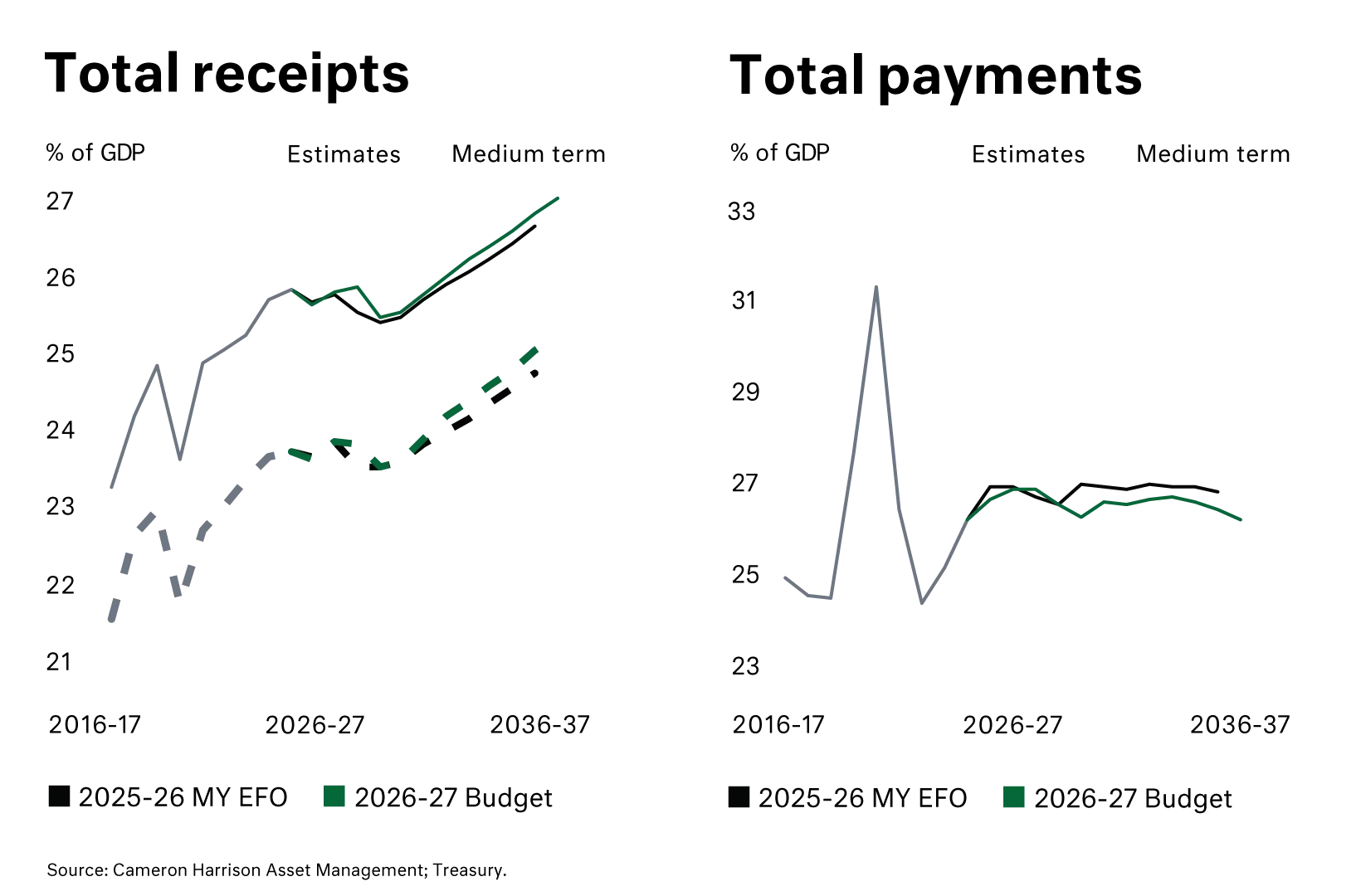
  • Higher commodity prices and wage inflation has delivered around $100bn of additional receipts over the forward estimates; approximately half of this windfall is returned as additional spending, with the rest to reduce the deficit by $44bn.

  • Most savings from the budget are related to the NDIS, with spending growth projected to fall from 10% to 2%; as evidenced by previous attempts to rein in NDIS spending, this projection should be taken with a grain of salt.

  • More than nine out of ten dollars in budget repair over the next decade comes from higher receipts rather than lower spending.

  • Changes to CGT taxation, negative gearing and super taxes deliver little budget repair in the short term, as these will be grandfathered or not implemented until 2027, or 2028 for changes to trust taxation.

  • Gross debt to exceed $1 trillion in 2026 and interest payments to reach $31.7bn per annum in 2030.

What this means for investors and households is a larger and more persistent role for government in the economy. Spending is expected to average around 26.5% of GDP over the decade, well above the old informal benchmark of circa 24% that was once viewed as necessary for budget repair. At the same time, taxes on capital are rising, bracket creep remains embedded in the income tax system, and total receipts continue to trend higher. Even if the budget eventually returns to balance, it is likely to do so through a higher overall tax burden and greater redistribution rather than a smaller or more disciplined public sector. 

The risk is that this fiscal stance makes the RBA’s task harder. The budget relies heavily on restraining NDIS spending growth, despite a poor track record of governments achieving this in practice. If those savings fail to materialise, deficits will be larger than forecast and fiscal policy will remain more stimulatory than intended. In an economy already dealing with sticky inflation, that increases the chance that interest rates stay higher for longer.  

The forecast mix of growth also tells an important story: real GDP growth is forecast to fall to 1.75% from 2.25% in FY26, reflecting the dampening effects of oil prices and higher interest rates. The fall sees growth in the public sector overtake private demand and points to a private economy that is struggling to generate momentum without government support. 

Graph - Budget 2026 Total recepits vs Total payments
1. When will the budget return to surplus?

A surplus is not forecast until 2035. Without another commodity windfall, that looks unlikely, with the government more likely to focus on keeping debt-to-GDP stable rather than paying debt down. 

2. Is budget repair coming from spending restraint or higher taxes?

Mostly from higher receipts. More than nine out of every ten dollars of budget repair over the next decade comes from increased revenue rather than lower spending.

3. Do the proposed tax changes improve the budget position quickly?

No. Changes to CGT, negative gearing and superannuation taxation deliver limited short-term budget repair because many measures are grandfathered or delayed until 2027 or 2028.

4. What does this mean for the RBA?

The budget may make the RBA’s job harder. Higher government spending, stronger redistribution and limited spending restraint can add to inflationary pressure, increasing the risk that interest rates remain higher for longer.

5. What does the budget say about the private economy?

The budget forecasts real GDP growth of 1.75%, with public demand growth to overtake in FY27. This highlights the weak state of the private economy and the growing role of government in driving activity.

As partners in your investment journey, we monitor, examine, and navigate change. The Federal Budget is one such factor in our highly considered investment strategy and wealth management process.

This article is one part of our 2026 Budget series. To read more of our Budget commentary, click the links below:

For more information on our approach to wealth strategy and investment management, please contact us on +613 9655 5000 or contact our experts here.

Speak to one of our advisers to learn more: david.clark@cameronharrison.com.au

Sourced from:

The Commonwealth of Australia – Budget Papers