SpaceX IPO: What are Investors Really Buying?

Investment Solutions
By David Clark, Partner - Investment Management
Posted 04 June 2026
  1. Valuation higher than a space rocket
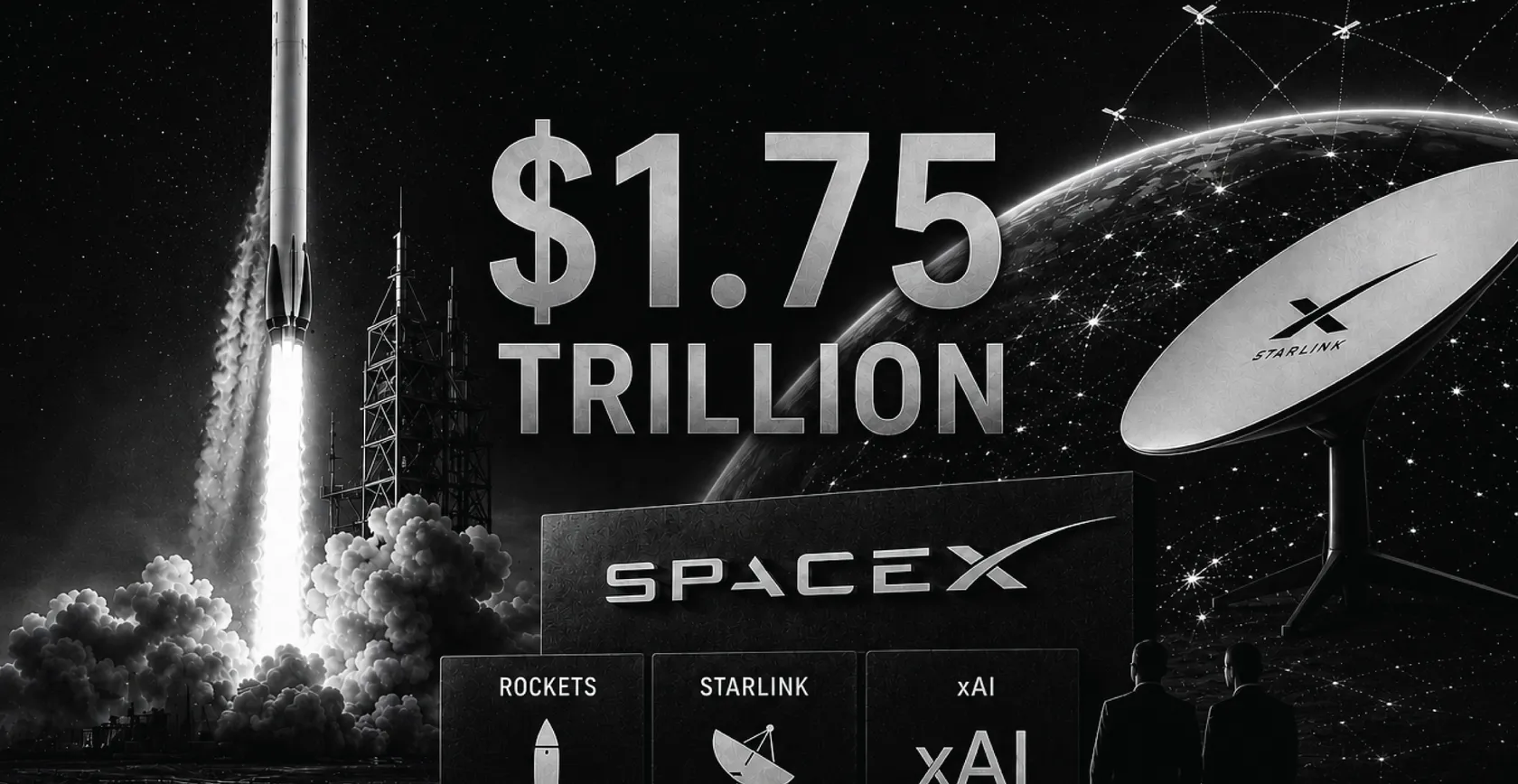
    The target $1.75 trillion valuation prices the company as the 12th biggest in the world, despite losing $5 billion a year, and equates to a multiple of 100 times sales.

  2. Investors are buying three very different businesses
    A profitable satellite network, a strategically important but loss-making rocket business, and an AI company with significant losses and uncertain economics

  3. The IPO structure may matter as much as the fundamentals
    A small free float, accelerated index inclusion and strong passive ETF demand could influence the share price independently of underlying business performance

Wall Street is preparing for what may become the largest IPO ever attempted.

SpaceX is reportedly seeking a valuation of approximately US$1.75 trillion, despite generating a consolidated loss of roughly US$5 billion last year. At that valuation, investors would be paying close to 100 times revenue for a business whose only meaningful profit engine today is Starlink.

The challenge for investors is separating the genuinely extraordinary business from the increasingly extraordinary valuation.

Starlink is a remarkable asset. The satellite internet business generated approximately US$11.4 billion in revenue last year and around US$4.4 billion in operating profit. It is growing rapidly, expanding margins and building what may become one of the world's most valuable communications networks.

The rest of the business is harder to justify.

SpaceX has fundamentally changed the economics of space launch through reusable rockets and has established a commanding position in commercial launch services. However, great technology does not always translate into great economics. The rocket division generated approximately US$4 billion in revenue but remained loss-making.

The most controversial piece of the puzzle may be xAI. The artificial intelligence business generated approximately US$3.2 billion in revenue last year but reportedly lost around US$6.4 billion. Several key individuals involved in the company's formation have departed, raising questions about the durability of its competitive advantage. Investors are also being asked to fund a business that requires enormous ongoing capital investment and has yet to demonstrate a clear path to attractive economics.

In effect, investors are being asked to buy one outstanding business, one strategically important but unprofitable business, and one extraordinarily expensive AI experiment, all wrapped together at a valuation larger than the combined value of America's defence industry.

The IPO structure adds another layer of intrigue.

The growth of passive ETFs that track the Nasdaq 100 means that index inclusion can create a wave of automatic buying by passive investors. To encourage SpaceX, and potentially other large private technology companies such as OpenAI and Anthropic, to list, Nasdaq has introduced rule changes that make it easier for companies with small free floats to be included sooner and at a higher index weighting.

The key changes include:

• Shortening the time to index inclusion from three months to 15 days

• Waiving the traditional minimum 20% free float requirement

• Applying a multiplier to companies with free floats below 20%, effectively increasing their index weight

Insider lockups also appear to be taking a different form. Rather than the standard 180-day restriction, shares are expected to be released on a rolling schedule at 70, 90, 105, 120 and 135 days after listing. This structure appears designed to match insider selling with demand generated by passive investment funds.

Historically, the greatest IPOs have often been the greatest opportunities for existing shareholders rather than new investors. Excitement surrounding a listing can create enormous demand, particularly when the supply of shares is tightly controlled. Many high-profile IPOs enjoy a strong first year before entering a more difficult period as valuation expectations collide with business reality.

The combination of relaxed index inclusion rules, a very small initial free float and heavy reliance on passive buying makes this IPO feel less like a traditional market transaction and more like a carefully engineered exercise in demand creation. It may also become the blueprint for future listings by large private technology companies.

SpaceX may well become one of the defining companies of the century. The question is whether that makes it a good investment at US$1.75 trillion.

Those are not always the same thing.

Why is SpaceX worth so much if it loses money?

Most of the valuation is tied to future expectations rather than current profits. Investors are effectively valuing Starlink's future dominance in global communications, alongside the long-term potential of the rocket business and xAI.

What is the biggest risk for new investors?

Valuation. Even exceptional businesses can deliver poor investment returns if purchased at excessively optimistic prices. At US$1.75 trillion, expectations leave little room for disappointment.

Could the IPO still be successful?

Absolutely. Strong demand, limited share supply and automatic buying from passive investment funds could support the share price for some time. The key question is whether that demand remains once the initial excitement fades and investors focus on earnings and cash flow.

Speak to one of our advisers to learn more: david.clark@cameronharrison.com.au