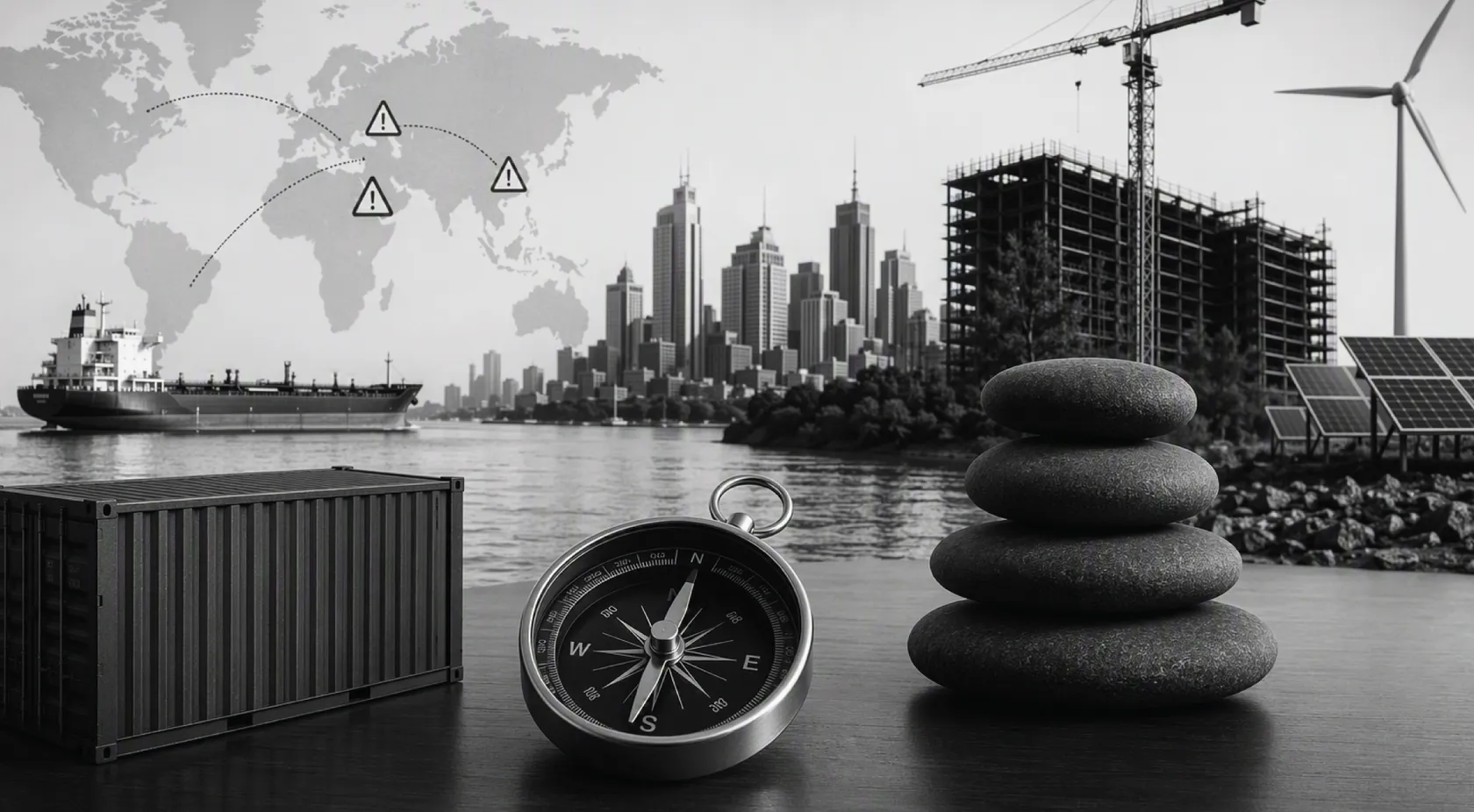
The year's sharpest jolt came from the conflict between Iran, Israel, and the United States. Oil jumped from around US$60 a barrel to nearly US$120 before settling back to where it started. With roughly 20% of global oil supply passing through the Strait of Hormuz, the episode was a reminder that supply chains built for efficiency, not resilience, remain acutely exposed to geopolitical shocks.
The response to that fragility, re-shoring production and rebuilding defence capability, will demand enormous investment. Decades of underspending are now being reversed, and that reversal carries a price.
Australia has joined the global rush to build AI infrastructure. Investment in the telecommunications and IT sector, which ran at roughly $2 billion a year for two decades, has climbed above $7 billion, echoing the surge seen in the United States on a smaller scale.
Whether these data centres deliver lasting economic benefit is still an open question. They employ few people and import most of their components. What is not in doubt is their appetite for energy, construction, and raw materials.
Supply-chain resilience, the green energy transition, AI infrastructure, and defence all draw on the same finite pool of raw materials, energy, and capital. That competition is a structural support for inflation, and it helps explain why prices are proving so difficult to return to central bank targets. This is the backdrop against which we position portfolios.