Pain for Some, Joy for Others - RBA (re)asserts macro high ground
Investment Solutions | Market Insights
By

Paul Ashworth, Managing Director

As 2026 unfolds, the Reserve Bank of Australia (RBA) has reasserted its grip on the macroeconomic narrative. A 25 basis point hike in February – lifting the cash rate to 3.85% – marked a sharp reversal in policy expectations. Just months earlier, markets had been pricing in rate cuts. Now, further hikes are on the table, driven by persistent inflation and stronger-than-expected private demand combined with significant and sustained public sector demand.
Posted 09 February 2026

Two key forces are behind this hawkish pivot. First, sticky inflation – particularly in services and housing – continues to exceed forecasts, driven by tight labour markets, robust wage growth and tepid productivity gains. 

Second, strong migration-led population growth is placing sustained pressure on housing and rental costs – the largest components of the CPI basket.  

With the RBA’s preferred inflation metrics refusing to quickly return to target, policymakers have lifted the projected peak in the cash rate and flagged further action if price momentum doesn’t ease. 

This backdrop of elevated rates and persistent inflation directly informs how income-focused investors must now think about fixed income strategies. The opportunity to earn real yield is finally back – but so is the need for thoughtful portfolio construction in a higher-rate, more volatile macro environment. 

Without bank hybrids to lean on, income portfolios must expand into a broader set of credit instruments. Key alternatives include: 

  • Senior and corporate bonds – offering dependable income and capital stability. 

  • Private credit – selective exposures can boost returns but require illiquidity tolerance and skilled managers. 

  • RMBS and ABS – asset-backed securities, often AAA-rated, with attractive floating yields and low correlation to equities. 

  • Kangaroo bonds – foreign bank debt issued in AUD, broadening credit exposure. 

  • Income ETFs and listed trusts – packaging diversified exposures into ASX-traded vehicles. 

The challenge now is not lack of choice, but constructing the right blend of assets to deliver yield with clarity and control.

Cameron Harrison had pre-empted that policy makers would curtail bank hybrids to retail investors, anticipating APRA’s move and the declining risk-reward profile of hybrids. Our Core Interest Income Strategy is now anchored in a highly diversified portfolio of over 70 direct holdings across investment-grade securities (BBB+ or better) – including senior and Tier 2 bank bonds, RMBS, ABS, and covered bonds.

Unlike pooled funds, Cameron Harrison’s Core Interest Income Strategy invests directly in bonds, giving clients full ownership, visibility, liquidity and flexibility of their capital. Liquidity is carefully managed through a short-to-medium maturity profile, ensuring clients retain capital stability and reinvestment agility even in volatile markets.

The strategy targets a 3-year government bond yield + 2% – which, in the current environment, equates to an expected return of around 6% – without straying into high-yield or opaque instruments. This is achieved through a layered approach:

  • Core holdings in senior and subordinated investment-grade debt provide stability.

  • Selective yield-enhancers like private credit are used in measured doses.

  • Liquid positions ensure the ability to pivot quickly when market opportunities arise.

Crucially, every investment undergoes independent credit and liquidity assessment, with a strong emphasis on risk-adjusted returns. The result is a robust income strategy that adapts to the new regulatory landscape without compromising on quality or transparency.

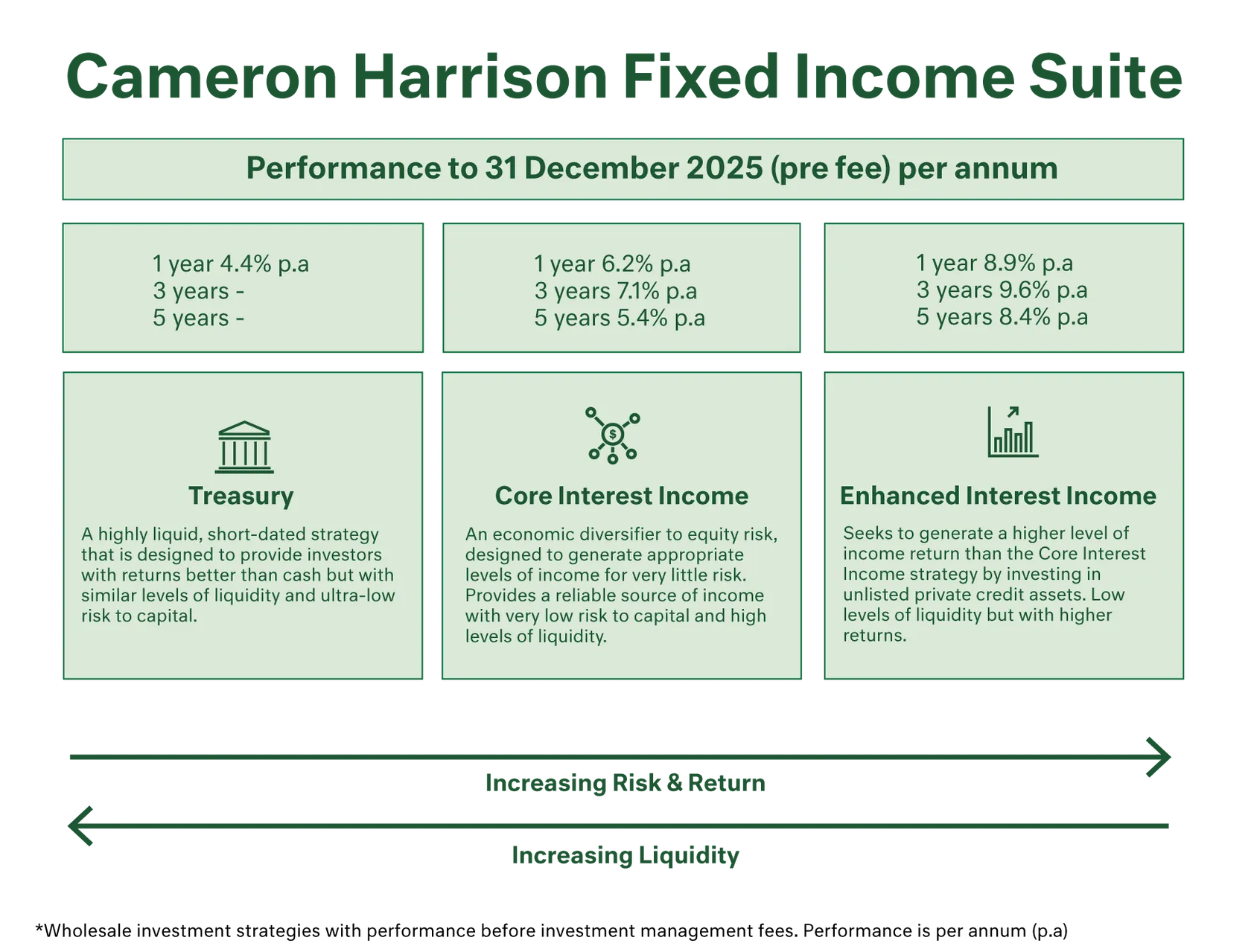
Depending on a client’s capital and risk needs, we manage and provide clients with a complete spectrum of interest income solutions, from Treasury, Core Interest Income and Enhanced Interest Income.  Together with performance, these are highlighted below.

The removal of hybrids marks the end of a product that was convenient but often misunderstood. In its place, a more diversified and resilient income investing approach is emerging – one that aligns better with long-term capital preservation, regulatory clarity, and macroeconomic stability.

For investors, the takeaway is simple: income is back, but strategy matters. With bond yields elevated, investors no longer need to chase complexity to achieve their goals – they need structure, discipline, and access to quality credit. With the right active strategy, portfolios can be positioned not just to replace hybrid income, but to improve upon it – with greater visibility, lower risk, and more control.

Speak to one of our advisers to learn more: paul.ashworth@cameronharrison.com.au

Sourced from:

Photo by iStock