
Market Timing – Crises and Strategy

Market Insights | Investment Solutions
By

Matthew Nolan, Associate Adviser

David Clark, Partner - Investment Management

Crises are painful. They can be uncomfortable. But they can also be an opportunity. When it comes to investing one’s hard-earned cash, it is easy to let emotions take control, leading either to paralysis or to bets that are too large. In this article, we look at how a disciplined approach can drive better returns, including tips for new investors and how existing investors can embrace the ‘hodl’.
Posted 08 April 2026

For new investors, the primary challenge is sequencing risk – the risk that an immediate drop in markets leaves them instantly worse-off.

Deploying a lump sum on a single day creates short-term outcome dependence. If markets fall shortly after investment, the experience is negative from the outset. Even if fundamentals remain intact, confidence can erode quickly.

A staggered approach to investment helps address this. Reliance on a single entry point is reduced by allocating capital progressively. This smooths the path of entry, capturing a range of prices rather than a single market level. In periods of volatility, this often results in capital being deployed at more attractive valuations as markets decline.
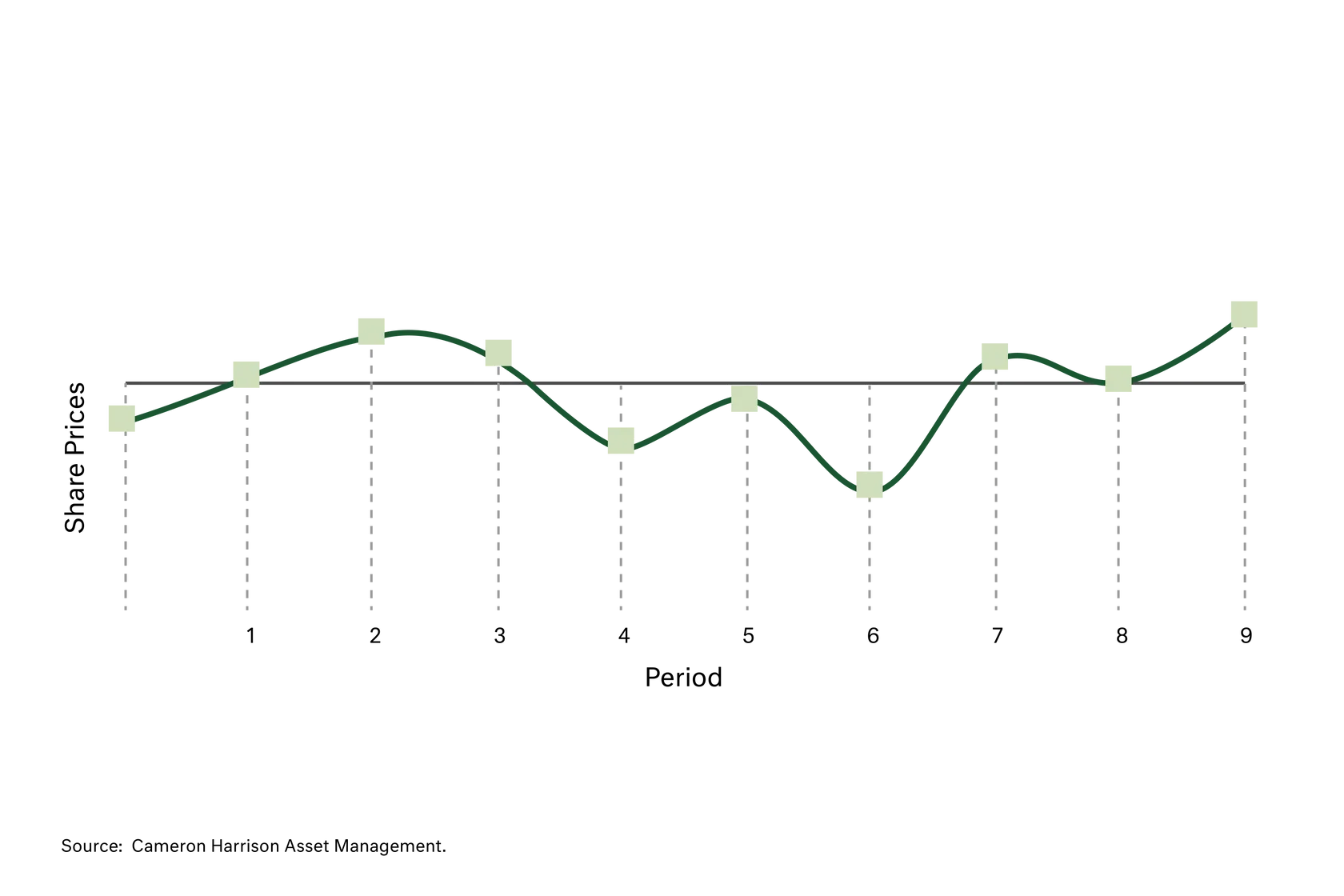
  1. Avoid investing the entire capital pool at once, do not rely on a single entry point

  2. Stagger investments to average into the market across different price levels

  3. Use volatility to opportunistically deploy capital at better valuations

  4. Stay focused on long-term fundamentals, not short-term moves

Chart for share prices

Crucially, this is not about attempting to time the market. It is recognition that short-term movements are unpredictable, particularly during crises. A structured investment plan removes the need to make repeated judgement calls in uncertain decisions.

The objective is not to maximise short-term returns. It is to improve consistency of outcomes and reduce the risk of materially adverse entry points.

For many investors, particularly those with large cash positions entering the market, this trade-off is both rational and desirable. In the words of Kenneth Fisher: Time in the market beats timing the market.

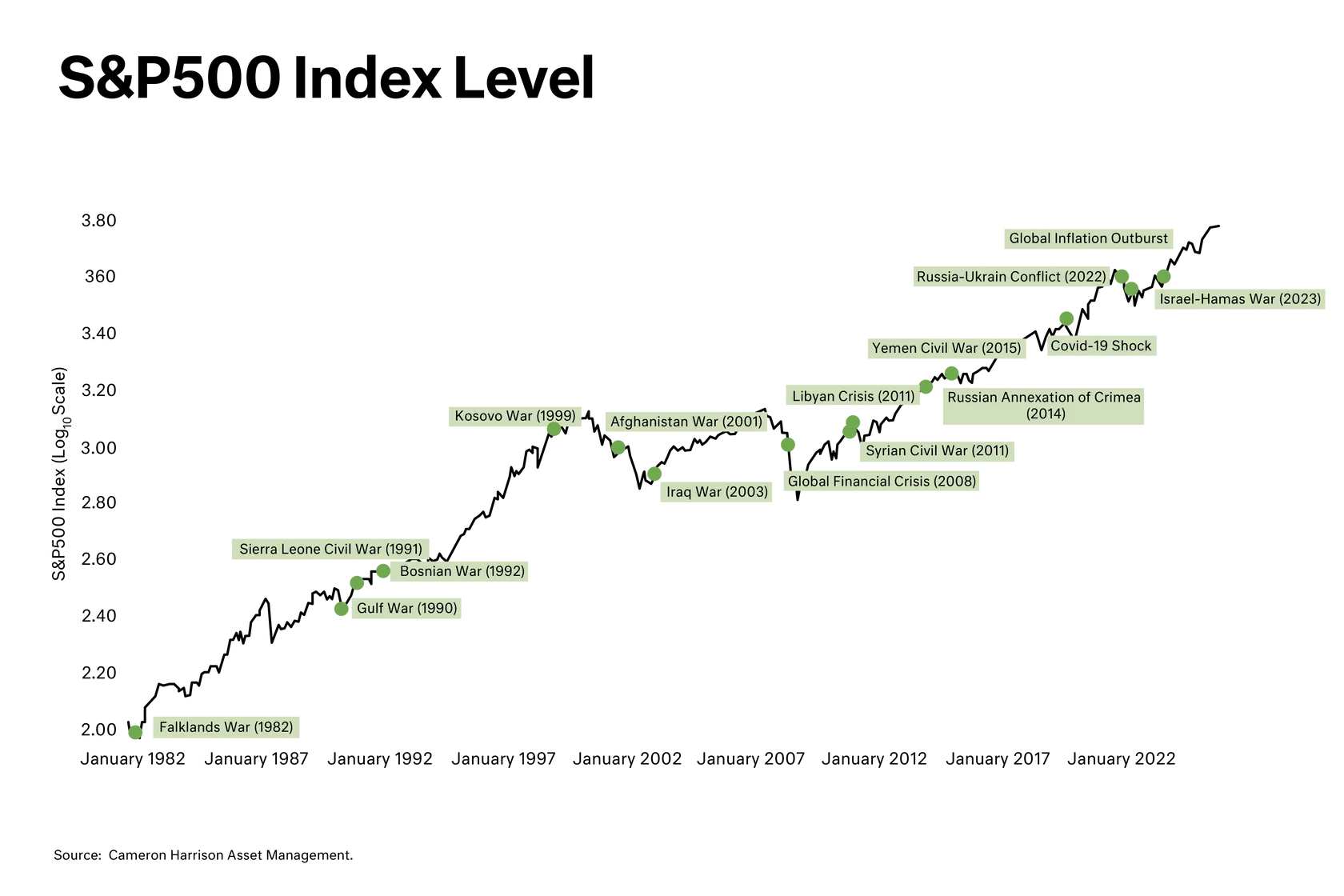
Chart S&P500 Index Level

For investors already in the market, the challenge is maintaining discipline. Crises test conviction. Sharp downturns, negative headlines and heightened uncertainty create a strong temptation to act, often in ways that are counterproductive.

The risk here is not sequencing, but behaviour. Selling into weakness, delaying investment, or attempting to tactically adjust exposures based on short-term news can erode long-term returns.

Importantly, markets often recover before sentiment improves, meaning reactive decisions may result in missed recoveries. Markets are forward looking and do not wait for clarity. Discipline, therefore, becomes the central strategy.

Ultimately, successful investing through crises is not about avoiding volatility, but about navigating it effectively. For those already invested, this means staying the course and recognising that periods of stress are an inherent part of the investment cycle, not an aberration.

Across both cohorts, the common thread is clear. Whether deploying capital from cash or remaining invested through volatility, outcomes are improved not through prediction, but through process. A disciplined, structured approach helps investors manage uncertainty, participate in recoveries, and avoid the behavioural pitfalls that so often accompany market crises

Speak to one of our advisers to learn more: matthew.nolan@cameronharrison.com.au

Sourced from:

Photo by Istock