
Big Opportunities in Selling the ‘Shovels’

Investment Solutions
By David Clark, Deputy Chief Investment Officer Matthew Nolan, Associate Adviser
In every market boom, there are two types of participants: those chasing the prize and those enabling it.
Posted 26 June 2025
  • Investing in “enablers” can reduce risk by capturing growth across an entire industry rather than relying on a single winner.  

  • Companies that supply essential inputs often benefit from multiple demand sources, improving resilience and earnings visibility.  

  • In volatile and fast‑moving sectors, focusing on infrastructure rather than outcomes can create more consistent returns. 
During Australia’s 1850s gold rush, Cobb & Co. made a defining choice. Rather than gamble on striking gold, they provided a service every prospector needed – transportation to the goldfields. Their business succeeded not because they found gold, but because thousands were trying to. They sold the metaphorical “shovels,” delivering steady returns whilst others took speculative risks. 

This principle underpins our approach to equity investment. Rather than attempt to pick the singular winner in a high-growth theme, we look to own the enablers - those who sell the essential goods and services to the entire field. It is a strategy that broadens the customer base, reduces binary risk, and aligns returns with industry-wide momentum rather than one company’s execution. This addresses a common challenge for investors: how to gain exposure to high-growth themes without relying on a single company outcome. 

A current example from our portfolio is CRH plc, a global leader in building materials. CRH doesn’t build roads, bridges, or data centres - it supplies the concrete, aggregates, and materials that make them possible. As infrastructure spending surges globally, CRH sells to the winners - regardless of who wins the project tender. It is a powerful way to participate in the upside of a capital expenditure boom without picking the right contractor or project. 

Similarly, Vertiv Holdings exemplifies the “shovel seller” amidst the AI and data centre boom. Vertiv provides power management and thermal infrastructure solutions essential for hyperscale data centres and high-density compute environments. As demand for AI computing accelerates, Vertiv benefits not by choosing the winning software model, but by selling the hardware backbone to everyone building and scaling data infrastructure. Its role is indispensable, regardless of whether OpenAI, Meta, or Amazon leads in AI innovation. 

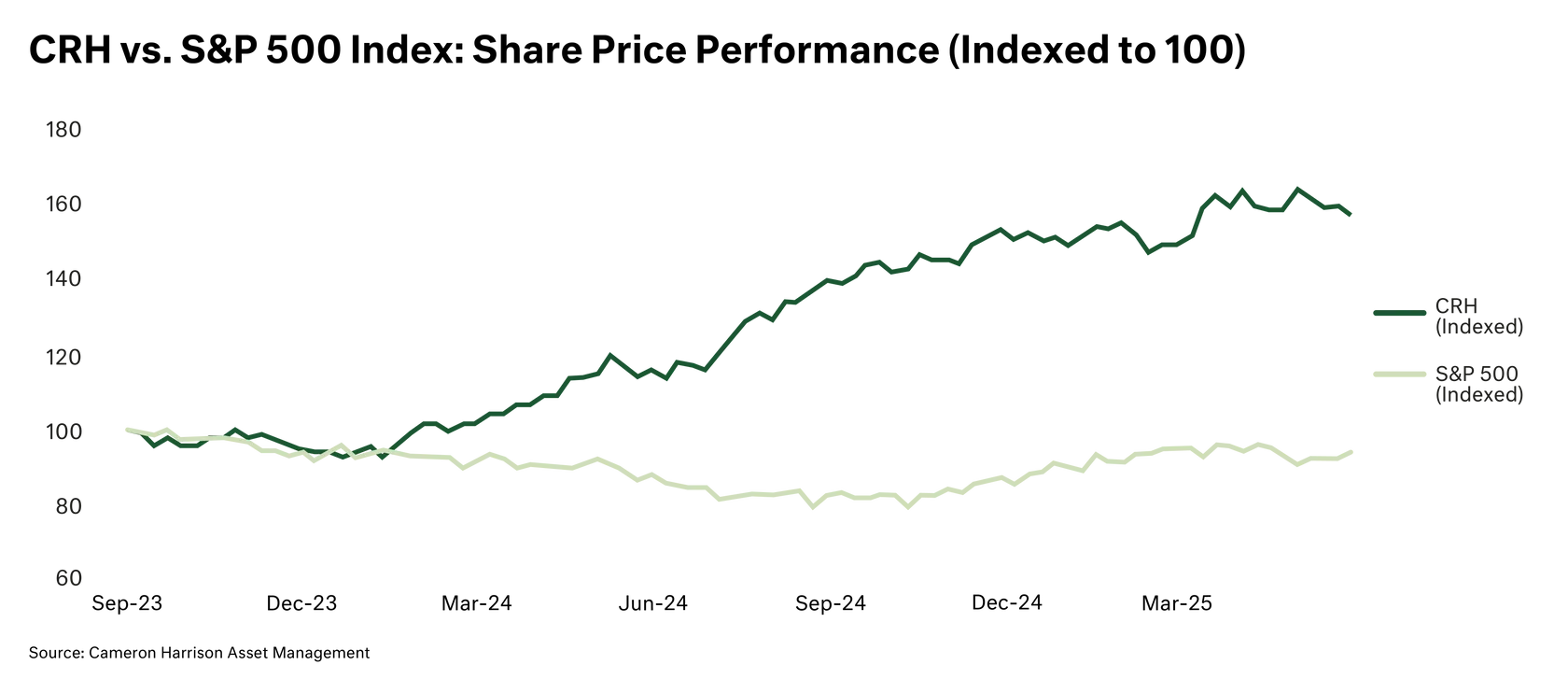
Over the past three years, both CRH and Vertiv have significantly outperformed broader market benchmarks. Their success highlights the resilience and upside of businesses positioned to support high-growth sectors - without being hostage to the binary outcome of who wins the race. 

In a world of rising volatility, regulatory complexity, and technological disruption, betting on the demand for fundamental inputs is often more reliable than trying to pick which end-product company will win. 

In practical terms, this approach allows investors to participate in structural growth trends while managing concentration risk and reducing reliance on forecasting specific winners. 

As investors, we are not in the business of chasing gold. We are in the business of enabling those who do – and doing so in a way that’s diversified, repeatable, and backed by strong underlying demand. Just like Cobb & Co., we prefer a full stagecoach of paying customers to a single uncertain strike. 

Chart -CRH vs S&P 500 Index
1. What is the “shovel seller” investment strategy?

The “shovel seller” strategy focuses on investing in companies that provide essential goods and services to a growing industry, rather than trying to pick the ultimate winner. These businesses benefit from broad industry demand, which can reduce reliance on any single outcome and improve the consistency of returns. 

2. Why can enabler businesses be less risky than direct investments?

Enabler businesses often serve multiple customers across a sector, which diversifies their revenue base. Instead of depending on one company’s success, they benefit from overall industry growth. This can reduce binary risk and provide more stable earnings, particularly in emerging or competitive markets.

3. How do investors apply this approach in modern markets?

Investors can apply this approach by identifying industries with strong long-term growth-such as infrastructure or AI-and then focusing on companies that supply critical inputs. This shifts the focus from predicting winners to participating in broader demand trends, often with lower volatility. 

Speak to one of our advisers to learn more: david.clark@cameronharrison.com.au

Sourced from:

Photo by iStock